When Screen Time Can Help a Child Decompress
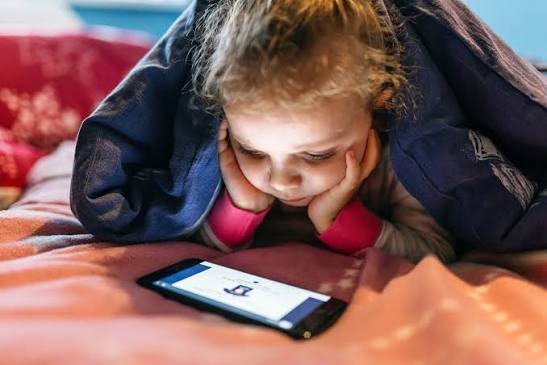
Could screen time actually help an overwhelmed child feel calmer?
We are often told that screen time is something we should limit, monitor or avoid, particularly when a child is already feeling overwhelmed.
But is it always true that a screen will make an overstimulated child feel worse?
As coaches and counsellors, we regularly hear this concern from parents. Their child comes home from school tired, irritable or overwhelmed, and the first instinct is often to switch off the television or put away the tablet.
The thinking is understandable: if a child has already had a day full of noise, activity and sensory input, surely adding more stimulation will only make things worse.
But whilst working with neurodiverse children, I've found that the answer isn't quite that simple. Sometimes, carefully chosen screen time can actually be part of a child's decompression process.
The key is understanding what kind of screen experience we are offering and, more importantly, how that particular child responds to it.
Decompression doesn't mean removing every stimulus
When we think about helping a child calm down, we might imagine creating complete silence: no television, no devices, no conversation and no activity. But our brains don't necessarily work that way.
A child can come home from school carrying the effects of an entire day of sensory and emotional experiences. They may have spent hours navigating:
- classroom noise and conversations
- social interactions and expectations
- bright lights and busy environments
- changes in routine
- transitions between activities
- instructions and demands
- emotional experiences
- physical sensations and movement
- a constant stream of information
For some neurodiverse and highly sensitive children, that can be a lot to process. And when they walk through the front door, their nervous system doesn't instantly reset. The aim of decompression, therefore, isn't necessarily to remove every source of stimulation.
It's about helping to reduce the overall demand on the nervous system so the child has an opportunity to settle.
Sometimes, surprisingly, a screen can help with that.
Why can a screen sometimes feel calming?
At first, this might sound contradictory. How can something that provides visual and auditory stimulation help a child who has already had too much stimulation?
The answer may lie in the type of stimulation. A familiar television programme or calm game can create a predictable, contained experience.
For a short period of time, the child doesn't have to manage all the demands of the world around them.
They don't have to:
Answer questions.
Make decisions.
Maintain a conversation.
Respond to other people.
Monitor everything happening around them.
Work out what is expected of them.
They can simply watch. For some children, that predictability can feel safe. When a child settles down with a familiar programme or something I like to call "gentle TV," I can sometimes see the change in their body. Their shoulders relax. Their breathing becomes slower. Their expression softens.
It's not that the screen itself is magical. Rather, the right kind of screen experience may temporarily reduce some of the demands being placed on the child's brain.
The important distinction: not all screen time is relaxing
This is where the conversation around screen time needs a little more nuance.
I'm certainly not suggesting that unlimited screen use is helpful, or that every type of digital content is calming. Rapidly changing videos, loud sounds, intense games, highly dramatic programmes and endless scrolling can keep the brain alert and engaged. For some children, these experiences may actually increase arousal rather than reduce it.
So instead of simply asking: "Is my child having screen time?"
It can be more helpful to ask: "How is this particular screen experience affecting my child?"
There is a significant difference between watching a familiar, slow-paced programme in a quiet room and scrolling through fast-moving, unpredictable content.
The content matters.
The environment matters.
The timing matters.
And most importantly, the individual child matters.
How to make screen time more calming
If you notice that your child finds a screen helpful after a demanding day, there are ways to make that experience more supportive.
Choose slower-paced content
Look for programmes, films or games that have a steady rhythm, predictable storylines and fewer rapid changes. Familiar content can also be reassuring because your child already knows what to expect.
Turn the volume down
After a noisy day, your child may not need more loud sounds competing for their attention. A lower volume can create a gentler sensory environment.
Reduce the brightness
If your child is sensitive to light, reducing the brightness of a phone, tablet, laptop or television may make the experience more comfortable.
Reduce background stimulation
Where possible, let the screen be the main focus rather than having television, conversations, music, household noise and people moving around at the same time. A calmer environment can make a significant difference.
Keep the routine predictable
If your child knows when the screen time will start and roughly how long it will last, the experience may feel more manageable.
For some children, an unexpected "time to turn it off" can create more stress than the screen itself.
Notice what happens afterwards
This is perhaps the most valuable part. Don't just focus on how long your child spends on the screen. Pay attention to what happens afterwards.
Does your child seem calmer?
More connected?
Less irritable?
More able to communicate?
More comfortable with sensory input?
More ready to engage in another activity?
Those observations can tell you much more than a simple rule about whether screen time is "good" or "bad."
Screen time can be a tool, not an escape
The intention isn't to make a screen the only way your child learns to regulate. Instead, think of it as one possible tool in their regulation toolkit.
Perhaps your child watches something calming for twenty or thirty minutes and then feels ready to go outside.
Maybe they watch a familiar programme before reading a book.
Perhaps screen time helps them settle enough to draw, chat or engage with the family.
In that situation, the screen isn't necessarily preventing regulation. It may actually be helping to create the conditions for it.
The important thing is to remain curious rather than judgemental. Ask yourself: "What is my child getting from this right now?"
Every child decompresses differently
There is no single recipe for helping a child recover from a demanding day. One child may need to run around outside. Another may need to curl up quietly with a book. Someone else may need music, drawing, movement, deep pressure or sensory play. Another child may want to sit on the sofa and watch something familiar. And all of those responses can be valid.
This is particularly important when supporting neurodiverse children. What helps one child regulate may have the opposite effect on another.
A child who becomes calmer while watching a gentle programme may genuinely be using that experience to recover. Another child may become more restless and agitated in front of a screen and may actually need more movement and sensory input to regulate.
There is no universal answer. The child in front of you is the guide.
Look beyond the screen
Rather than judging screen time in isolation, look at the bigger picture.
What has your child experienced that day?
How much sensory input have they had?
How socially demanding has their day been?
Are they tired, hungry, anxious or emotionally overwhelmed?
What does their body seem to be asking for?
Sometimes the answer will be a screen.
Sometimes it will be movement.
Sometimes it will be connection.
Sometimes it will be solitude.
Sometimes it will be all of these things at different points throughout the day.
The goal isn't to find one perfect strategy.
It's to understand your child well enough to recognise what helps them return to a more regulated state.
It's simply a screen
That doesn't mean screens are always helpful.
It means that perhaps we need to move away from the idea that screen time is automatically the enemy.
When used intentionally, thoughtfully and with attention to the individual child, a screen can sometimes provide a predictable, contained space where a busy brain can begin to settle.
So perhaps the question isn't always: "How do I get my child away from the screen?"
Perhaps sometimes it is: "Is this screen helping my child feel better?"
Because when it comes to children, regulation and sensory needs, things are rarely as black and white as they first appear. And screen time may be no different.
Feel free to contact us for more information, we are more than happy to help you and your child!
'Kolourful Unique' team